
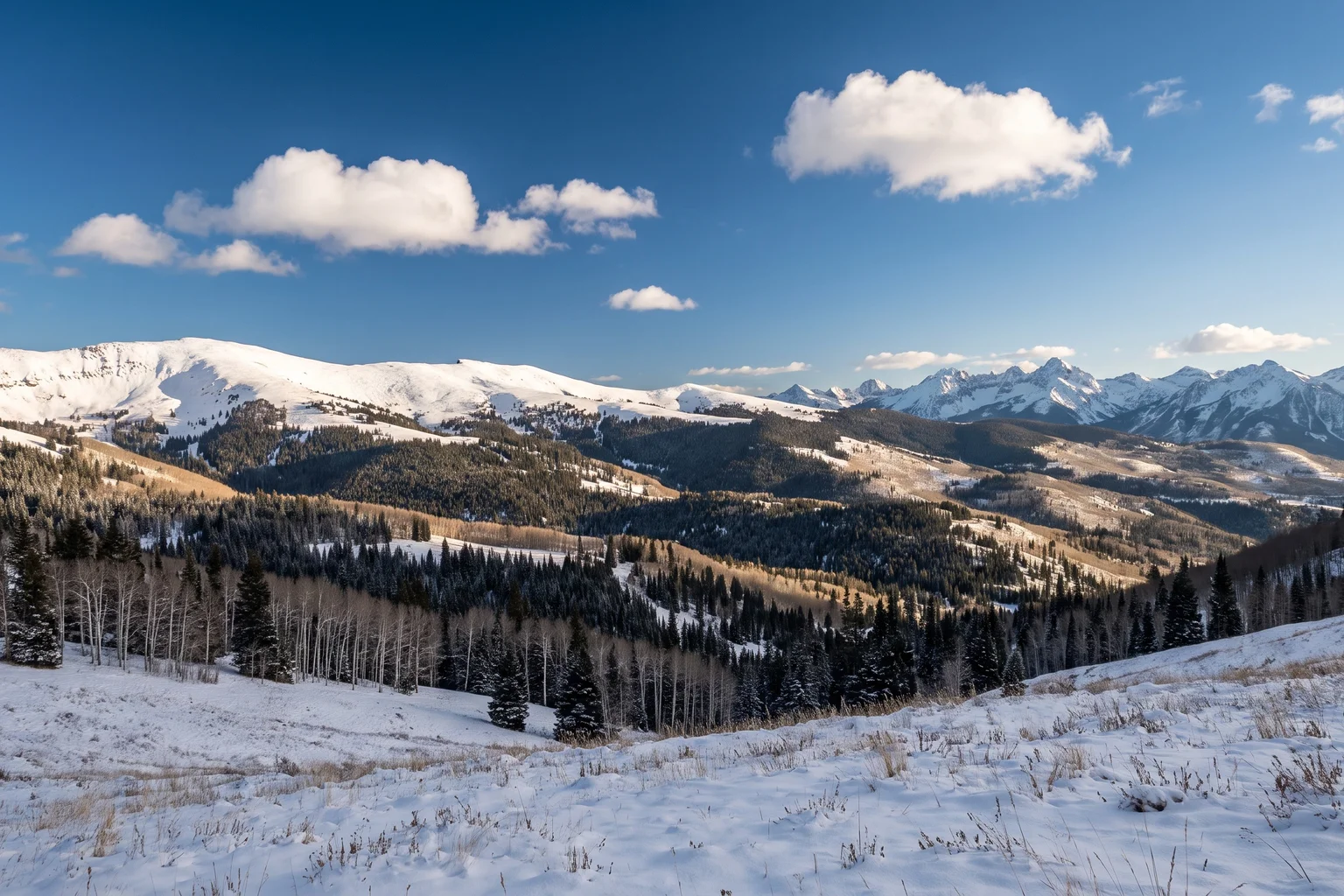
Illustrative image: a high Rocky Mountain valley in early winter, with spruce and aspen slopes below snow-covered ridgelines.
Most families planning a Snowmass trip ask the same two questions sooner or later: how high is this place, and will we feel it? The short answer is that Snowmass Village sits around 8,000 feet, the ski area tops out above 12,500 feet, and yes, many visitors from sea level notice the thin air for the first day or two. Here are the official numbers, where they come from, and a sensible way to plan the first days of your trip around them.
How high is Snowmass Village?
Snowmass Village is not one flat town at one elevation. It climbs the side of the Brush Creek valley, so the number depends on where you stand. The Town's tourism office, Snowmass Tourism, gives a few useful reference points:
- Town Park, the big flat green near the valley floor, is listed at 7,914 feet.
- The Base Village Events Lawn, in the middle of Base Village, is listed at 8,200 feet.
- The ski area's base elevation is listed at 8,604 feet on the Snowmass stats page.
For comparison, Aspen Snowmass's own altitude guide puts the town of Aspen at 7,908 feet. In other words, if you are sleeping anywhere in the village, you are sleeping at roughly 8,000 feet or a little above, which matters for the advice further down.
Snowmass ski area by the numbers
Snowmass is the biggest of the four Aspen Snowmass mountains. Aspen Snowmass describes it as having "the highest vertical rise, 4,400 feet, in the country" on its which-mountain guide. Here is how the official sources list the main figures today:
| Figure | Listed value | Source |
|---|---|---|
| Summit elevation | 12,510 ft / 3,813 m | Snowmass Tourism; White River National Forest |
| Base elevation | 8,604 ft / 2,623 m | Snowmass Tourism |
| Vertical rise | 4,406 ft (Snowmass Tourism); 4,440 ft (Aspen Snowmass Ikon guide) | Both |
| Skiable terrain | 3,342 acres | Snowmass Tourism; Aspen Snowmass Ikon guide |
| Trails | 98 | Snowmass Tourism |
| Terrain mix | easiest 5%, more difficult 48%, most difficult 17%, expert 30% | Snowmass Tourism |
You will notice the sources do not match to the foot, and the base and summit figures do not subtract neatly into the vertical rise. Published ski area stats get revised as lifts and trails change, and different pages measure from different points, so treat these as good approximations rather than survey marks. The Forest Service page for the ski area, for example, still carries older acreage and trail counts. For the current version, check the trail map and stats on the official sites before you go.
For a tour of what all that terrain actually looks like, from the beginner zones to the Cirque, our Snowmass ski area guide walks through the mountain area by area.
What 8,000 feet feels like when you come from sea level
The CDC's travel-to-high-altitudes page treats travel above 8,000 feet as high altitude, which puts the whole village and every lift on the mountain inside that category. You are breathing thinner air, the sun is stronger, and the air is very dry. Aspen Snowmass's altitude guide notes that "one alcoholic drink at altitude has the same effect as two drinks at sea level," and that the dry air can lead to a cough.
The CDC lists the symptoms of acute mountain sickness, the mildest form of altitude illness, as headache, tiredness, lack of appetite, nausea and vomiting, and notes that young children who cannot talk yet may simply seem fussy. It also describes two rarer, serious conditions and what to do about them. We are not doctors, so rather than paraphrase medical guidance, we will point you to the source: read the CDC page before your trip, and if anyone in your group has heart or lung conditions or is pregnant, talk to your own doctor before you travel.
Planning a gentle first day
The CDC's prevention advice includes ascending gradually where you can, avoiding alcohol and heavy exercise for at least the first 48 hours above 8,000 feet, and asking a doctor about medicines that can help. You cannot change the elevation of Snowmass, but you can shape your itinerary around that advice. A few practical ways families do it:
- Keep arrival day easy. Unpack, take a slow walk around the village, eat a real dinner and go to bed early. Snowmass Tourism's beginner ski guide suggests arriving a day early if you can, to acclimate.
- Make day one of skiing a cruising day. Save the long hikes to steep terrain and the full top-to-bottom laps for later in the week. The mountain will still be there on day three.
- Drink more water than you think you need. Aspen Snowmass's guide recommends hydrating in the days before the trip as well as during it.
- Take the sun seriously. Sunscreen and lip balm with SPF belong in every pocket, even on cloudy days. Our Snowmass packing list has the full checklist.
- Watch the kids. Children may not tell you they have a headache. If someone is unusually tired or cranky, let them rest.
- Know where help is. Aspen Snowmass's guide names the Snowmass Clinic and Aspen Valley Hospital for anyone whose symptoms continue. On the mountain, any ski patroller can help.
Does the season change how altitude feels?
The elevation is the same in July as in January, but the experience differs. Summer visitors often hike higher than skiers ride, climbing well above the village on foot, while winter visitors add cold, wind and heavy gear. Either way, the CDC's advice to take the first couple of days gently applies. If you are still choosing dates, our guide to the best time to visit Snowmass compares the seasons.
Staying at Stonebridge
An easy first day is simpler when you are not driving around looking for parking or carrying skis across town. Stonebridge Condominiums is ski-in/ski-out, next to the Village Express lift at Fanny Hill, and Base Village is "just a quick 3-5 minute walk away," as our home page puts it. Every condo, from one to four bedrooms, has a fully equipped kitchen for quiet meals on arrival night, and there is a heated outdoor pool and two outdoor hot tubs for tired legs. On-site ski storage attendants look after your equipment, and a complimentary shuttle runs during office hours.
When you are ready to plan your trip, check availability or call us at 1-800-323-2577.
Frequently Asked Questions
What is the elevation of Snowmass Village?
There is no single number, because the village climbs a hillside. Snowmass Tourism lists Town Park at 7,914 feet and the Base Village Events Lawn at 8,200 feet, and gives the ski area's base elevation as 8,604 feet.
How high is the top of Snowmass ski area?
Snowmass Tourism and the White River National Forest both list the summit elevation as 12,510 feet (3,813 meters).
What is the vertical drop at Snowmass?
Snowmass Tourism lists a vertical rise of 4,406 feet, and Aspen Snowmass's Ikon passholder guide lists 4,440 feet. Aspen Snowmass also describes it as the highest vertical rise in the country, about 4,400 feet.
How many skiable acres does Snowmass have?
Aspen Snowmass and Snowmass Tourism both list 3,342 skiable acres for Snowmass.
Will I get altitude sickness in Snowmass?
Some visitors do. The CDC treats travel above 8,000 feet as high altitude and lists headache, tiredness, lack of appetite, nausea and vomiting as symptoms of acute mountain sickness. Its guidance, and when to get medical help, is on the CDC's travel-to-high-altitudes page.
Sources
- Snowmass Stats, Lift Hours & Important Dates — Snowmass Tourism (Town of Snowmass Village)
- Ikon Passholders Guide to Aspen Snowmass — Aspen Snowmass
- But, Which Mountain Do I Ski? — Aspen Snowmass
- Snowmass Ski Area — USDA Forest Service, White River National Forest
- Town Park — Snowmass Tourism (Town of Snowmass Village)
- Base Village Events Lawn — Snowmass Tourism (Town of Snowmass Village)
- How To Ski: The Complete Guide Of Tips For Beginners — Snowmass Tourism (Town of Snowmass Village)
- Travel to High Altitudes — Centers for Disease Control and Prevention
- Guide to Altitude Sickness & Elevation in Aspen Snowmass — Aspen Snowmass